Context
Alan* (not his real name) is a Year 8 student at a semi-rural high school who has always attended mainstream schooling. He has diagnosed Autism Spectrum Disorder (Level 2), ADHD, and a visual impairment, and is typically supported in class by a School Support Officer (SSO). I teach Alan in Mathematics; this is the first year I have worked with him, within a mixed-ability class of 16 students. (1.1, 1.5, 1.6)
At the beginning of the year, I consulted with Alan’s previous teachers and SSO’s, to better understand his learning needs. (7.4). They described him as an intelligent student with a strong interest in coding, but noted patterns of work avoidance, poor attendance, and a tendency toward dysregulated behaviour when overwhelmed. They also highlighted that he had limited peer connections. One practical recommendation was to seat Alan near the door so he could exit the classroom when necessary to regulate. I also reviewed Alan’s One Plan and previous learning records to ensure that classroom adjustments were aligned with his identified learning goals
In the early weeks of teaching Alan, I observed that he was reluctant to engage in class activities and often avoided attending lessons altogether, choosing instead to access the wellbeing breakout space (1.1). Feedback from an SSO indicated that he could abscond during breaks if not supervised. To reduce uncertainty and support Alan’s engagement, I established a highly structured and predictable classroom environment, using consistent routines such as “I do, we do, you do,” to reduce uncertainty and support regulation.
Actions
Prior to formal Inclusive Education involvement, I began implementing adjustments to better support Alan’s engagement. I introduced an online version of the mathematics textbook to improve accessibility, particularly in light of his visual impairment, and ensured that he was seated near the door to allow for self-regulated breaks. I also sought to connect learning to his interests by introducing an algebra substitution game (example cards). Alan quickly identified successful strategies within the game, and this became a turning point in his engagement. His confidence increased noticeably, and he began to participate more willingly in lessons.
An Inclusive Education observation was conducted on 5 March, 2026 to provide further insight into how Alan could be supported. During this lesson, Alan was seated near the door and working on his laptop using the digital textbook. He initially engaged briefly before showing signs of disengagement, including watching the time, avoiding interaction, and eventually closing his laptop. He requested multiple breaks, which appeared to function as regulation opportunities. While he did not consistently respond to teacher prompts or check-ins, he remained in the classroom for the duration of the lesson, which represented a positive step in itself. The Inclusive Education observation confirmed my initial observations while also highlighting the need for clearer lesson structure, planned opportunities for regulation, and continued use of strengths-based engagement strategies.(6.3, 7.4)
Following this observation, I met with Alan’s parents to strengthen the connection between school and home expectations. They expressed a strong desire for Alan to attend regularly and experience success in Mathematics. Together, we agreed on a consistent approach whereby Alan would complete a defined amount of work each lesson, with communication home if this was not achieved. Any incomplete work would then be finished at home before access to preferred activities. This established a shared sense of accountability and consistency across environments. (7.3)
Using recommendations from the Inclusive Education report, I refined my approach further. I transitioned Alan to the CORE version of the online textbook, which presents content in a less cluttered format and incorporates more real-world problem-solving tasks. This adjustment improved both accessibility and relevance for Alan. I also strengthened my use of explicit lesson sequencing, ensuring that expectations were clearly communicated, and continued to implement low-intervention strategies during periods of agitation to support de-escalation. Task expectations were kept clear and achievable, and I continued to incorporate elements of competition and digital learning to maintain engagement. (3.1, 3.2, 3.4, 3.7)
Results
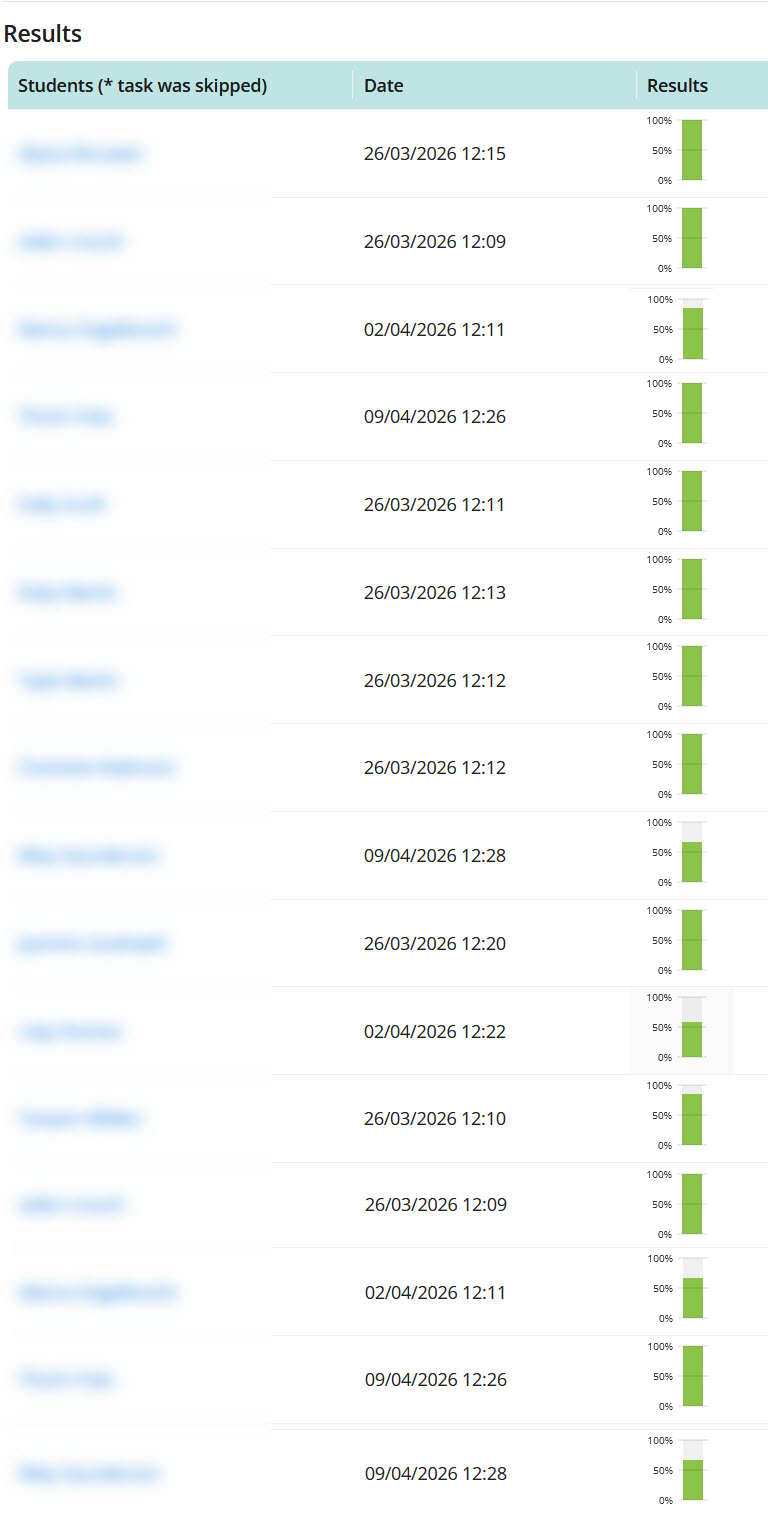
Over time, these strategies contributed to noticeable improvements in Alan’s engagement and learning. When he attended school, he became more settled in class and increasingly willing to participate in learning activities. His work showed clear progress, moving from simply recording answers to demonstrating working and mathematical reasoning. Alan usually completed the agreed amount of work during most lessons he attended, particularly when supported by the established home-school communication process.(4.1, 5.1, 5.4)
Alan’s use of breaks became more regulated and purposeful, with fewer instances of leaving the classroom for extended periods. Importantly, Alan increasingly volunteered answers during competitive activities and required fewer prompts to commence work, particularly when engaging in competitive or game-based activities. Alan increasingly initiated tasks independently, demonstrated his mathematical reasoning in written work, and was more willing to contribute during competitive learning activities. (4.2, 4.3)
Evaluation
This process has highlighted the importance of combining structured classroom practice with responsive, individualised support. The consistency of classroom routines, alongside improved accessibility through the CORE digital platform, played a significant role in supporting Alan’s engagement. Equally important was the collaboration with his parents, which created a unified approach to expectations and accountability. (3.7 4.2, 7.3)
The Inclusive Education observation provided valuable direction, particularly in reinforcing the importance of clearly visible lesson structure and planned regulation opportunities. Incorporating these strategies has strengthened both my inclusive teaching practice and Alan’s capacity to engage successfully in Mathematics. (6.3)
While progress has been evident, ongoing challenges remain in relation to Alan’s attendance and his ability to sustain independent engagement over longer periods. Moving forward, I will continue to embed visual lesson agendas, further develop his self-regulation strategies, and gradually increase expectations for independent work, while also supporting the development of his peer connections. (1.1, 1.6, 5.4)
The strategies implemented for Alan have also influenced my broader approach to planning for students requiring significant adjustments, particularly through the use of explicit routines, accessible digital resources and strengths-based engagement strategies.
Artefacts
| Evidence | Demonstrates |
|---|---|
| Year 8 Teaching Plan | Planned adjustments, explicit teaching strategies and differentiated learning to support Alan’s engagement. |
| Observation of Student | Specialist feedback that informed changes to lesson structure, regulation strategies and classroom practice. |
| Parent Meeting | Collaboration with Alan’s parents to establish consistent expectations and strengthen the home–school partnership. |
| Online Text book and CORE textbook | The use of accessible digital resources to reduce barriers to learning and increase engagement. |
| Substitution Game | Strengths-based learning used to increase motivation, confidence and participation. |
| Work Sample | Evidence of improved mathematical reasoning, work completion and increasing independence over time. |
| Lesson Plans | Evidence of student learning and impact of teaching |
Standards and Focus Areas
#1 Know the Students (1.1, 1.5, 1.6)
#3 Plan Teaching and Learning (3.1 3.2, 3.4, 3.7)
#4 Safe Learning Environment (4.1, 4.2, 4.3)
#5 Assess, Feedback and Report (5.1, 5.4)
#6 Professional Learning (6.3)
#7 Professional Engagement (7.3, 7.4)